Dulce de Leche Recipe: How to Make It from Milk and Sugar
One litre of milk, one pot, two hours at the stove. The from-scratch method, and how to know when to stop stirring.
Von Daniel MellicovskyBaker and owner, Melly's Cookiebar
There are two ways to make dulce de leche at home. One starts with a can of condensed milk and is covered in our condensed milk guide. This is the other one: the from-scratch version, made with fresh milk and sugar in an open pot, the way it has always been made in Argentina. It takes about two hours, most of it gentle stirring, and what you end up with is darker, silkier and less sweet than anything that comes out of a can.
If you are new to it, what is dulce de leche is the short introduction. If you already know it and want a jar of your own, read on.
Ingredients
- 1 litre whole milk
- 300 g white sugar
- 1/4 teaspoon baking soda (bicarbonate of soda)
- 1 vanilla pod, split, or 1 teaspoon vanilla extract
Use full-fat milk. Semi-skimmed will thicken in the end, but the result is thinner and less creamy. The recipe makes roughly 500 g, enough for one large jar.
For equipment you need a wide, heavy-bottomed pot that holds at least three litres. That sounds like too much for one litre of milk, but the milk foams up when the baking soda goes in, and a wide pot also evaporates faster. Add a wooden spoon or a heatproof spatula and a clean jar with a lid.
Method
- Put the milk, sugar and vanilla in the pot over medium heat. Stir until the sugar dissolves and bring it to just below the boil.
- Dissolve the baking soda in a tablespoon of cold water. Take the pot off the heat and stir it in. The milk will foam up for a few seconds.
- Put the pot back on low heat. You want a lazy simmer with small bubbles at the edges, never a rolling boil. Stir every few minutes, scraping the bottom and the corners.
- After about an hour the milk turns the colour of milky tea and starts to thicken. From here on, stir more often: the sugar is now concentrated and catches on the bottom easily.
- Somewhere between an hour and a half and two hours, depending on your pot and your hob, it turns a glossy amber brown and coats the spoon thickly. Take it off the heat when it still looks a little looser than you want. It thickens as it cools.
- Remove the vanilla pod, pour the dulce de leche into the jar and let it cool uncovered before closing it.
How to tell when it is ready
- The spoon test. Drag the spoon across the bottom of the pot. If the line stays open for a second or two before the caramel closes over it, you are there.
- The plate test. Drop a little onto a cold plate and tilt it. It should hold its shape and slide slowly, not run.
- The colour. Deep amber, like the dulce de leche in a shop jar. If it is still pale, the sugars have not caramelised yet; keep going.
Spreading or baking: clásico and repostero
Argentines buy dulce de leche in two textures. Clásico is the soft, spreadable one for toast and pancakes, and it is what the method above gives you. Repostero is thicker and holds its shape, so it stays put between two cookies or inside a cake. For repostero, keep cooking for another fifteen to twenty minutes, stirring constantly, until a drop on the cold plate stands up instead of spreading. That is the one you want for alfajores de maicena.
Why the baking soda matters
Milk is slightly acidic, and it gets more so as it reduces. A pinch of baking soda neutralises that acidity, which does two jobs: it keeps the milk from curdling during the long cook, and it speeds up the browning reaction that gives dulce de leche its colour and its toasty flavour. Leave it out and you get a paler, milder cream. Add too much and you can taste it, so keep to a quarter teaspoon per litre.
When it goes wrong
- Grainy. Some of the sugar has crystallised. Warm it gently with a splash of milk and blend it with a stick blender until smooth.
- Small lumps. The heat was a bit high and the milk started to split. A stick blender fixes it, and it still tastes right.
- Too runny once cold. Back into the pot for another ten minutes.
- Too stiff once cold. Loosen it with a spoonful of warm milk.
- Caught on the bottom. Do not scrape the burnt layer up. Pour the rest into a clean pot and carry on; the taste of burnt sugar spreads fast.
Storing it
Homemade dulce de leche has no preservatives, so keep it in a closed jar in the fridge and eat it within about two weeks. Take it out a little before you use it: straight from the fridge it is too firm to spread.
What to make with it
- Fill a batch of homemade alfajores
- Layer a no-bake chocotorta
- Spread it on toast, pancakes or crêpes
- Warm a spoonful and pour it over ice cream
Or buy a jar
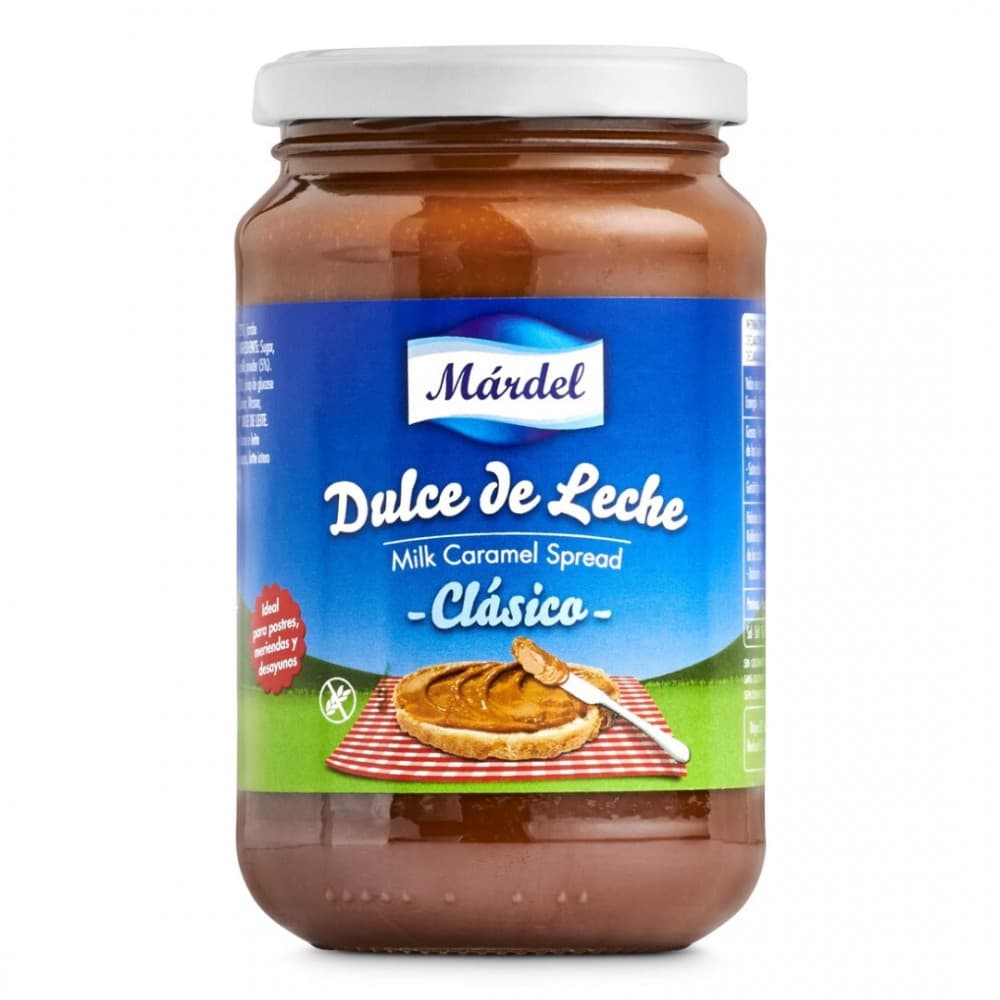
Two hours at the stove is a good Sunday, not something you do every week. At our Cookiebar in Amsterdam we stock two Argentine jars: Mardel Clásico, the everyday one Argentines keep in the cupboard, and Havanna, from the famous alfajores house in Mar del Plata, which is also the one we use in our own alfajores. Both ship across the Netherlands, Europe and the UK from our Argentine shop.
And if what you were really after was the alfajores, ours are baked by hand in Amsterdam and ship to the US as well. You will find them in our shop.
Probier es warm in Amsterdam
Bestell dir frische Stroopwafels direkt nach Hause oder lerne bei einem Melly’s-Workshop im Herzen der Stadt, wie man sie selbst backt.