Yerba Mate Caffeine: How Much Is in a Cup, a Gourd and a Tea Bag
Around 80 mg in a cup, far more in a gourd you refill all afternoon. How much caffeine yerba mate really has, and what moves the number.
By Daniel MellicovskyBaker and owner, Melly's Cookiebar
Yes, yerba mate has caffeine. Brewed like a tea, a 240 ml cup has around 80 mg: a little less than a filter coffee and close to twice a cup of black tea. That is the number you will find everywhere, and it is a fair one. It is also not how most people in Argentina drink it. They fill a gourd with yerba and keep topping it up with hot water for an hour or two, and that changes the arithmetic.
Here are the numbers by serving, what moves them, and how much is too much.
How much caffeine is in yerba mate
| Drink | Serving | Caffeine, roughly |
|---|---|---|
| Yerba mate, brewed like tea | 240 ml cup | 80 mg |
| Filter coffee | 240 ml cup | 95 mg |
| Espresso | Single shot, 30 ml | 63 mg |
| Energy drink | 250 ml can | 80 mg |
| Black tea | 240 ml cup | 47 mg |
| Cola | 330 ml can | 35 mg |
| Green tea | 240 ml cup | 28 mg |
These are averages. Every one of them moves with how strong you make it, and mate moves more than most, because nobody measures the yerba with a teaspoon.
The gourd is a different story
The dried leaf is somewhere between 1 and 2 percent caffeine by weight. A tea bag holds a couple of grams of leaf. A gourd filled the traditional way, about two thirds full, holds many times that, and the same yerba is washed with hot water again and again until it has nothing left to give.
One review of the research puts a traditional session, half a litre of water or more through the same yerba, at 260 mg of caffeine or more. That is nearer three coffees than one. The reason it does not feel like three coffees is the pace: it arrives in small sips over an hour or two, and in Argentina the gourd usually goes around a circle, so the total is shared. If you drink a whole thermos on your own at your desk, it is all yours.
The first pours are the strongest. Each refill pulls a little less out of the leaf, and by the time the mate is lavado, pale and without flavour, most of the caffeine has gone with it.
What moves the number
- How much yerba you use. This is the main lever. Half a gourd is half the caffeine.
- Stems or no stems. Most of the caffeine is in the leaf, and the stems carry far less. A yerba con palo, with stems, which is the Argentine standard, is milder gram for gram than a sin palo one, the finely cut, nearly all-leaf style Uruguay prefers.
- Water temperature. Hotter water extracts more and faster. Tradition puts it at 70 to 80 degrees. Tereré, the cold version from Paraguay, releases its caffeine more slowly.
- How long you keep going. Ten refills extract more than three. Obvious, and still the thing people forget at five in the afternoon.
- The format. Mate cocido, a single tea bag in a mug, is the mildest way to drink it and lands nearer a cup of tea than a cup of coffee. Bottled mate sodas are a separate product: Club-Mate, the German one, has 20 mg per 100 ml, so 100 mg in a half-litre bottle. Whatever the brand, the label will tell you.
Yerba mate vs coffee
Cup for cup, coffee has slightly more: around 95 mg against 80. The difference people notice is in the delivery, not the dose. A coffee is gone in three minutes. A mate lasts an afternoon, and it comes with theobromine, the gentler stimulant in dark chocolate. Most people who switch describe it as awake without the edge.
What the research does and does not say about the rest, the antioxidants, the weight claims and the cholesterol studies, we went through in yerba mate benefits.
Is mateine different from caffeine?
No. Mateine is an old name for the caffeine in yerba mate, from a time when people believed each plant had its own stimulant: the theine in tea, the guaranine in guarana. They all turned out to be the same molecule. If a pack promises energy from mateine and not from caffeine, it is selling you a word.
How much is too much
The European Food Safety Authority considers up to 400 mg of caffeine a day, from all sources, to be no safety concern for healthy adults, and up to 200 mg in one sitting. In pregnancy and while breastfeeding the figure is 200 mg a day.
In practice: five cups of brewed mate reach the daily figure, and so does one long gourd session plus a coffee. The same assessment notes that 100 mg close to bedtime is enough to cost some people sleep, so make the last mate a mid-afternoon one. If you are pregnant, on medication or know you are sensitive to caffeine, ask your doctor and not a bakery blog.
Choosing a yerba by strength
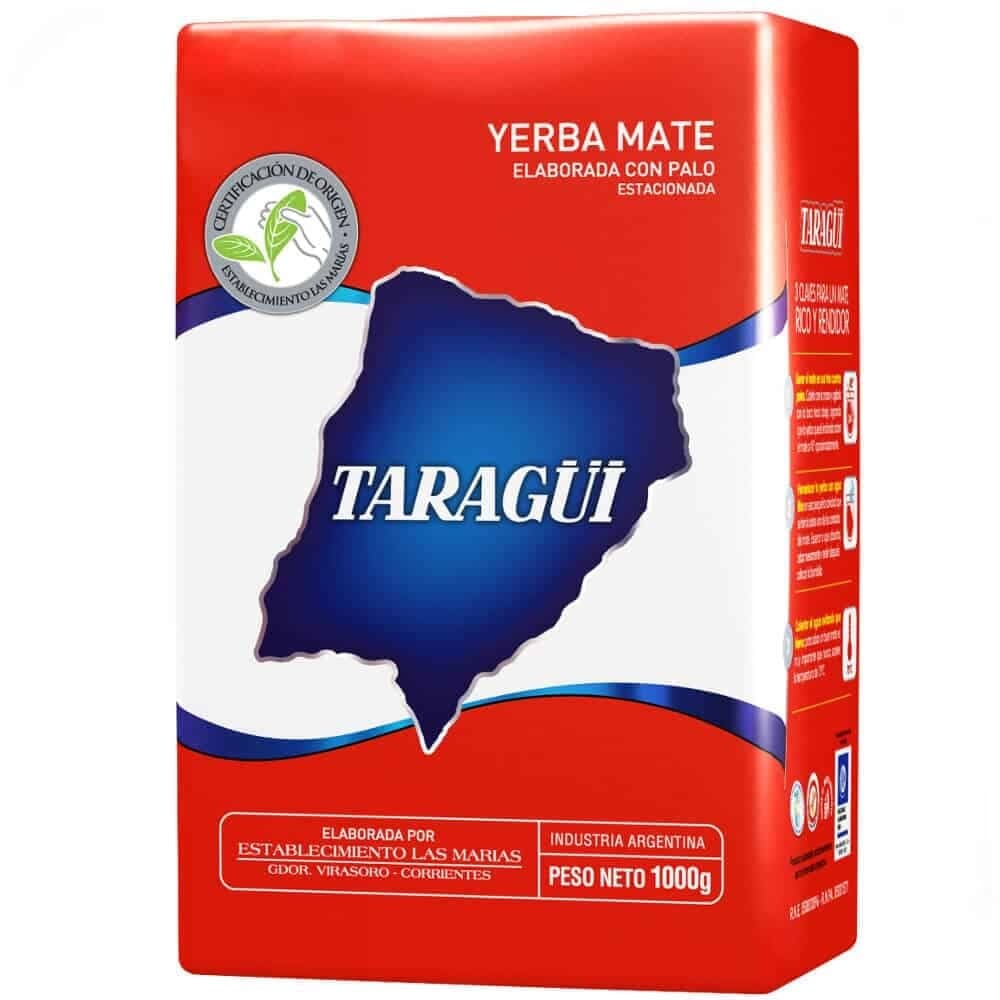
We do not have lab figures per brand, so take this as a guide to style, not to milligrams. Playadito is the mild one, cut with stems, and the easy place to start. Taragüi, also with stems, is bolder and more balanced, the everyday mate on tables all over Argentina. Rosamonte is the intense one of the three. Canarias is the Uruguayan style, finely cut and without stems: full-bodied, and the one to treat with the most respect if caffeine keeps you up.
Mate is rarely drunk on its own. In Argentina there is almost always something sweet next to the thermos, and that is the part we bake: alfajores filled with dulce de leche and cookies made fresh in Amsterdam. For the mate itself, the Playadito starter set has 500 g of yerba, a glass mate cup wrapped in leather and an alpaca bombilla, and the full yerba mate shelf is there if you already have the gear. New to all of it? Start with what yerba mate is and how to prepare it.
Taste it warm in Amsterdam
Order fresh stroopwafels to your door, or learn to make your own at a Melly's workshop in the heart of the city.