Dulce de Leche Cookies With a Soft Caramel Centre
Stir dulce de leche into a dough and it disappears. Freeze it first and wrap the dough around it, and you get a proper soft centre.
By Daniel MellicovskyBaker and owner, Melly's Cookiebar
Dulce de leche is harder to bake with than it looks. Stir it into a cookie dough and most of the flavour disappears. Spoon it on top and it darkens and turns chewy in the oven. The way to get a real pocket of it is to freeze it first and wrap the dough around it, so the cookie has set by the time the centre melts.
This recipe does exactly that: a soft brown-sugar cookie with crisp edges, a centre of warm dulce de leche and a little flaky salt on top. It makes 16 cookies and takes about 30 minutes of work, plus an hour in the freezer and fridge.
Ingredients
- 160 g thick dulce de leche
- 150 g unsalted butter, soft
- 150 g light brown sugar
- 50 g white sugar
- 1 egg, at room temperature
- 1 teaspoon vanilla extract
- 260 g plain flour
- Half a teaspoon of bicarbonate of soda
- Half a teaspoon of salt
- Flaky sea salt, to finish
Use a dulce de leche thick enough to hold its shape on a spoon. A jar works, and so does our homemade dulce de leche or the condensed milk version, cooked until thick. Skip the thin caramel sauces sold as dulce de leche: they run straight out of the cookie.
Freeze the centres
Line a small tray with baking paper and drop 16 mounds of dulce de leche on it, about two teaspoons each. Freeze them for at least an hour. They will not go rock hard because of all the sugar, but they will be firm enough to pick up, which is all you need.
Make the dough
- Beat the butter and both sugars for about 2 minutes, until pale and fluffy.
- Beat in the egg and the vanilla.
- Add the flour, bicarbonate of soda and salt, and mix only until no dry flour is left.
- Cover the bowl and chill it for 30 minutes. A cold dough is much easier to wrap around the centres, and it spreads less in the oven.
Shape and bake
- Heat the oven to 180 °C (160 °C fan) and line two baking trays.
- Divide the dough into 16 balls of about 40 g. Flatten one in your palm, put a frozen centre in the middle and pinch the dough closed around it. Roll it lightly between your hands and check there are no gaps.
- Put the balls on the trays with plenty of room between them, 8 per tray at most, and sprinkle each with a few flakes of salt. Work quickly. If the centres soften, put the tray back in the freezer for 10 minutes.
- Bake one tray at a time for 11 to 13 minutes, until the edges are golden and the middle still looks a little underdone.
- Leave the cookies on the tray for 10 minutes before you move them. The centre is molten at this point, and it is much hotter than the cookie around it.
When it goes wrong
- The filling leaked. The dough had a gap, or the centre was too big for it. A small leak bakes into a chewy edge and tastes good. Next time, pinch the seam well and put it on the underside.
- The cookies spread flat. The butter was too soft or the dough too warm. Chill the shaped balls for 15 minutes before baking.
- The centre is hard once cool. The dulce de leche went on cooking in a long bake. Take the cookies out earlier: they finish on the hot tray.
- They taste too sweet. Add more flaky salt. Dulce de leche needs it more than most fillings do.
Three other ways to do it
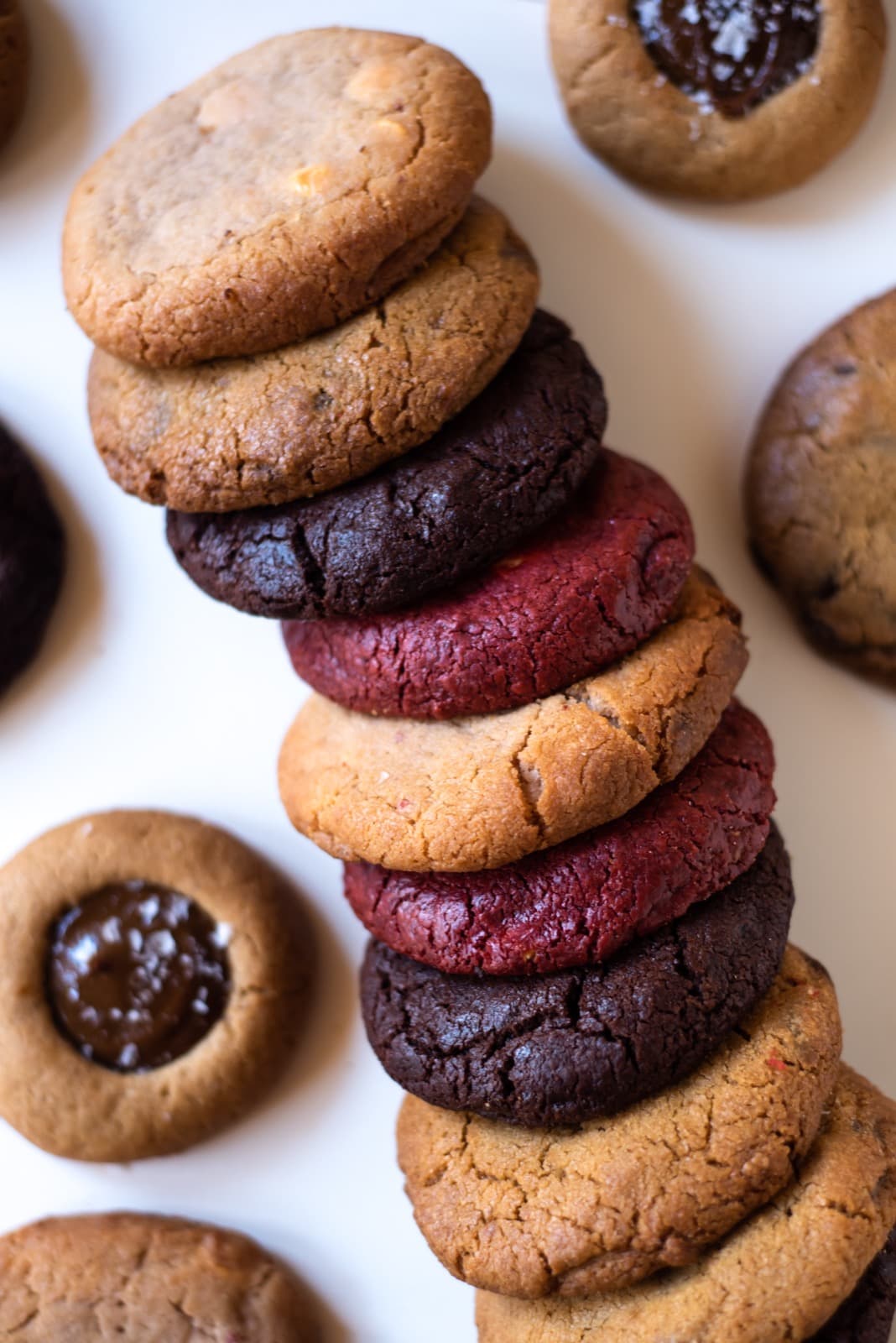
- Thumbprints. Roll the balls without a filling, press a well into each with your thumb and bake for 10 minutes. Press the wells again as soon as they come out, let them cool and fill them with a spoonful of dulce de leche. No freezing, and the filling stays glossy.
- Brown butter. Melt 170 g of butter until it smells of toasted nuts, then chill it until it is soft and spreadable again. Use it in place of the butter above for a deeper, nuttier cookie. Browned butter and dulce de leche both get their flavour from browned milk solids, which is also what sets dulce de leche apart in our guide to dulce de leche versus caramel.
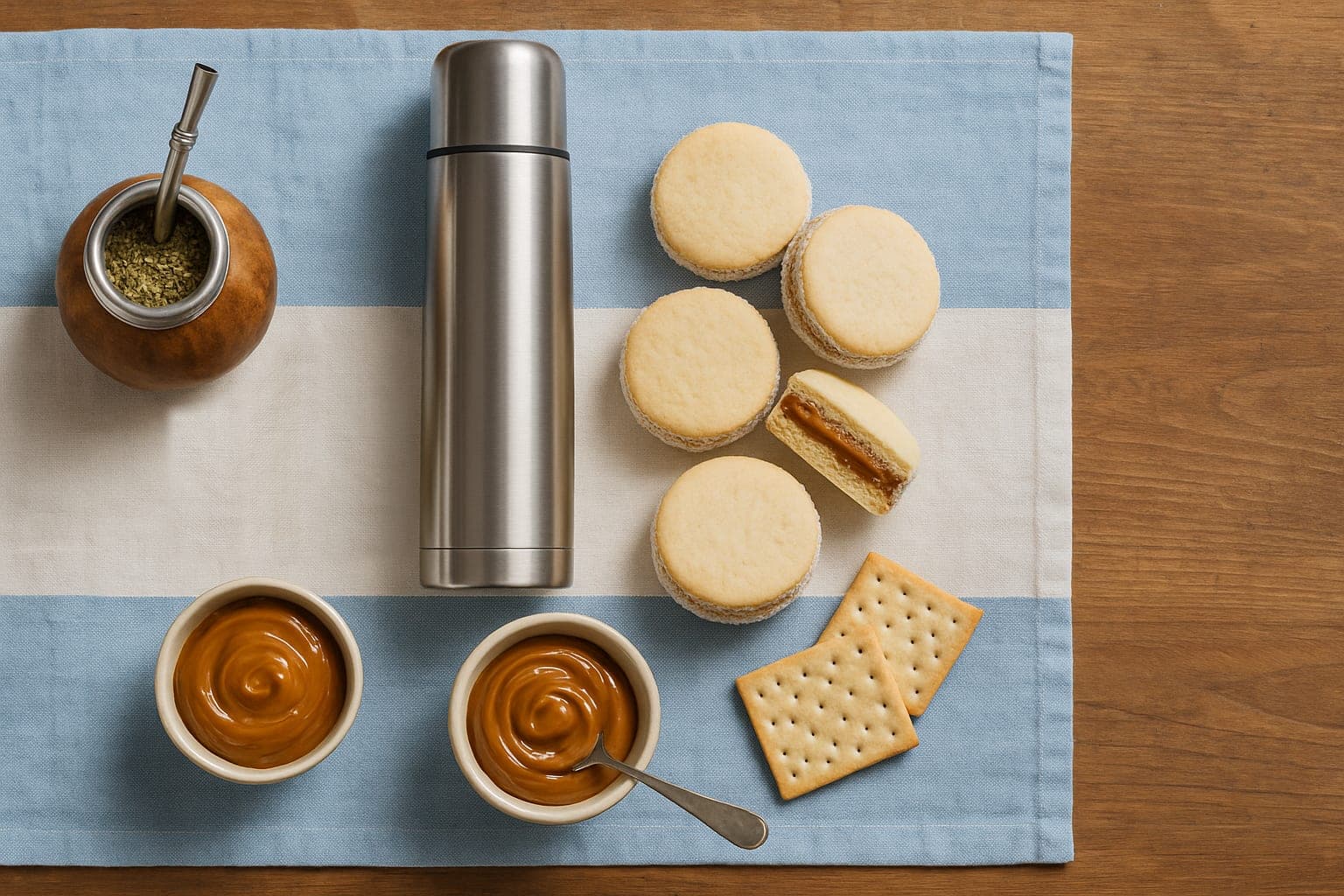
- Sandwiches. Two soft cookies with dulce de leche between them is the idea behind the alfajor, the Argentine classic. Those use a tender cornstarch dough instead of this one, and our alfajores recipe walks through it.
Storing them
The cookies keep for three days in an airtight tin. They are at their best warm, so give them 5 minutes in a low oven before serving. The unbaked, filled balls freeze well for up to a month: bake them straight from the freezer and add 2 minutes.
Not in the mood to bake?
At our Cookie Bar in Amsterdam, the closest thing on the counter is the Salted Caramel cookie, with soft caramel and a pinch of sea salt, and dulce de leche fills the alfajores we make by hand. The full menu is on our cookies page.
If you are not in Amsterdam, you can fill a cookie gift box with your favourite flavours, and a box of 18 alfajores de maicena ships to the US, the UK and across Europe. To bake this recipe, we stock Havanna dulce de leche and more in our Argentine shop, shipped across Europe and the UK.
Taste it warm in Amsterdam
Order fresh stroopwafels to your door, or learn to make your own at a Melly's workshop in the heart of the city.